“You are a thief! You are a thief!”
The pastor cried as he huffed and puffed into the microphone while prancing up and down the aisle. The pastor leaped onto the platform with energy and once more repeated his harsh accusations. Suddenly, he stopped shouting, and the church fell silent.
The pastor placed the microphone gently on the glass podium and looked down at the sea of eyes staring at him.
Then he spun to face his audience on the platform—the church choir, and whispered, “When you do not pay your tithes, you are a thief because you have robbed God!”
Is this statement factual?
If you fall on hard times and cannot afford to pay your tithes, are you a thief?
Should a pastor accuse his congregation of stealing from God?

What Does the Bible Say About Offerings and Tithes?
“Will a man rob God? Yet you have robbed (H6906) Me! But you say, ‘In what way have we robbed You?’ In tithes and offerings. You are cursed with a curse, for you have robbed Me, even this whole nation.” (Malachi 3:8-9 NKJV)
The verse above states that the nation of Israel robbed God through tithes and offerings.
Does this verse mean that when members of the church do not pay their tithes and offering they steal from God?
Before answering this question, it is best to examine some key words that are used in the above scripture.
These words are tithes and offerings.
Rob
Dictionary.com lists four meanings of the word “rob”. These are:
- To take something from (someone) by unlawful force or threat of violence; steal from.
- To deprive (someone) of some right or something legally due: e.g., They robbed her of her inheritance.
- To plunder or rifle (a house, shop, etc.).
- To deprive of something unjustly or injuriously: e.g. The team was robbed of a home run hitter when the umpire called it a foul ball. The shock robbed him of his speech.
The word rob that is used in the above scripture is from the Hebrew word “qâba”H6906, which means to cover (figuratively), to defraud or spoil.
Thus, numbers 2 and 4 of the English definition of rob were used in the context of Malachi.
This same Hebrew word was translated as spoil in the scripture below:
For the LORD will plead their cause, and spoilH6906 the soul of those that spoiledH6906 them. (Proverbs 22:23 KJV)
Tithing
Strong’s Definitions of tithe “maʻăsêr”H6240 means a tenth part.
The tithes were a tenth of their earnings, and in ancient Hebrew history, these tithes were agricultural produce.
And all the tithe (H4643) of the land, whether of the seed of the land, or of the fruit of the tree, is the LORD’s: it is holy unto the LORD. (Leviticus 27:30)
Tithing began in Genesis 14:20 when Abraham gave Melchizedek a tenth of all the spoils he acquired after he defeated the kings who had taken Lot captive.
The high priest first blessed him and had communion with him.
The bread and wine they shared symbolized Jesus Christ’s blood covenant. This was an unbreakable covenant.
Therefore, tithing is not only giving money to the church, but it also means giving your time, your skills, your talents, and your produce, whether goods or services.
God requires at least a tenth of the above things, but He requires one hundred percent of your heart or life.
Offering
What is offering? Is it money?
Offering in our modern-day churches is equivalent to money. However, in the Bible, an offering could be either a burnt offering or a gift.
In the text in Malachi, according to Strong’s dictionary, offering means “minchâh” from an unused root, which means to apportion, i.e., bestow; a donation; euphemistically, tribute; specifically a sacrificial offering (usually bloodless and voluntary):—gift, oblation, (meat) offering, present, sacrifice.
This offering is a sacrificial gift, such as money, food, or any other gift.
In the Old Testament period, bloodless offerings, such as the grain offering, were given directly to the temple.
Speak unto the children of Israel, that they bring me an offeringH8641: of every man that giveth it willingly with his heart ye shall take my offeringH8641. (Exodus 25:2 KJV)
Thus, your offering is a gift and must be given willingly to help build the body of Christ and further spread the teachings of the Lord.
The Blessings of Giving Willingly
You must not be shamed or coerced into giving your tithes and offerings. You should never feel pressured or forced to give, as this is not symbolic of the willingness God requires of us.
Pastors who coerce their congregations into giving are essentially depriving their members of the true blessing of giving from a free and willing heart.
Then the Lord spoke to Moses, saying, “Speak to the children of Israel, that they bring Me an offering. From everyone who gives it willingly with his heart, you shall take My offering.
And this is the offering which you shall take from them: gold, silver, and bronze; blue, purple, and scarlet thread, fine linen, and goats’ hair; ram skins dyed red, badger skins, and acacia wood; oil for the light, and spices for the anointing oil and for the sweet incense; onyx stones, and stones to be set in the ephod and in the breastplate.
And let them make Me a sanctuary, that I may dwell among them. According to all that I show you, that is, the pattern of the tabernacle and the pattern of all its furnishings, just so you shall make it. (Exodus 25:1-9 NKJV)
God gave Moses a list of items the people should give toward the building of the Tabernacle in the wilderness.
The Lord specifically told Moses that he should only take an offering from those who gave it with a willing heart. This means that God did not accept gifts given grudgingly or under coercion.
The people gave their gifts willingly, with a joyful heart, because they knew they were helping to build a tabernacle where God would live among them.
The presence of God among His people means protection, provision, and peace. This should be your ultimate goal when you give willingly to God.
Your Best Gift to God
The sacrifice that God desires is a broken spirit and a contrite heart.
The sacrifices of God are a broken spirit: a broken and a contrite heart, O God, thou wilt not despise. (Psalm 51:17 KJV)
The best gift that we can give to God is our life and our time. These are more precious than money.
He wants the total you—The Oil and the Wine.
Unfortunately, we live in a society that is money-conscious, money-hungry, money-grabbing, money-hoarding, and money-talkative.
These money lovers have infiltrated the churches from the pulpit to the pew.
Some of these pastors and bishops are so desperate for money that they will deliberately twist the scripture and shame their congregation to fill their pockets.
These prosperity preachers have built their empires from the pockets of the poor and needy in their congregation.
When they have millions of followers, they write many books, which they sell to their followers, and then claim that it is the source of their great wealth.
The church should be a place of deliverance and healing. A place where you will be encouraged and strengthened.
If you attend a church service feeling depress you should never leave feeling the same or even worse.
As my Jamaican mother would say, “You enter the church like a Johnny cake and leave like a dumpling.”
Will a Man Rob God?
Corrupt church leaders are robbing the people of their blessings when they use the Bible to shame their congregation.
Christians rob God when they do not spend time with Him.
God is robbed when His people only give Him a part of their lives.
God is robbed when the Church is lukewarm.
God is robbed when Christians live a double life.
Therefore, as believers in Christ, let us focus on our relationship with God, which is far superior to financial contributions.
What other ways are we robbing God?
What is your insight on tithing and offering?
Share your thoughts with me.



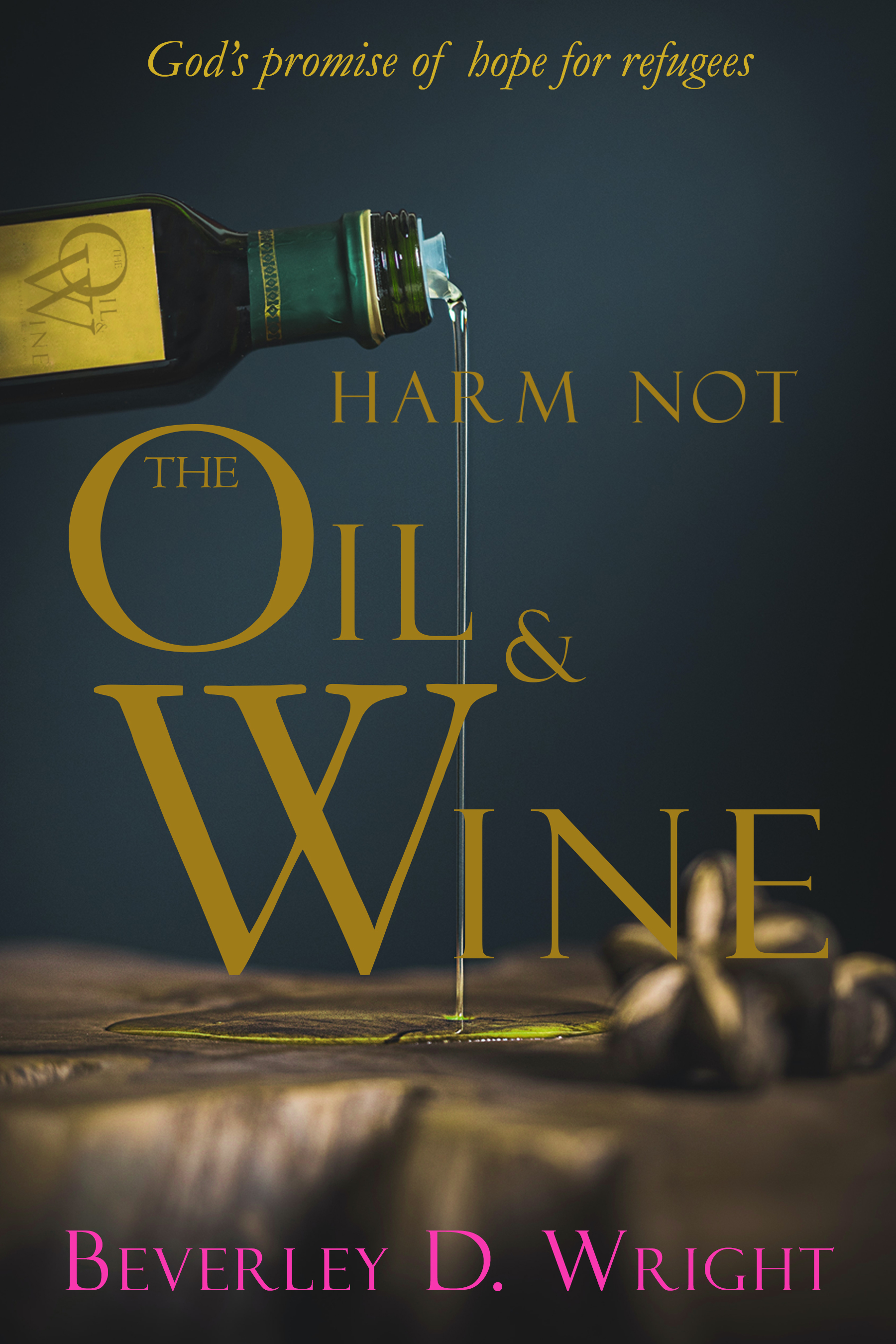


 Becoming the Oil and Wine
Leave a reply to Beverley Cancel reply