Hello, for those who may not be familiar with me, I am Beverley’s daughter. The last time I wrote on the blog was in 2017 after Hurricane Irma.
It’s been three years since, but now circumstances have changed vastly.
Updates on the Pandemic
As many of you know, the COVID-19 pandemic is widespread throughout the world and is causing a lot of mass panic and hysteria, but ultimately, that is the problem.
A lot of people have been dying from this virus—specifically, the elderly and those with underlying health conditions, but as time progresses, we see the media beginning to generate a new set of information: that even seemingly healthy people are dying from the virus.
So, what’s the problem?
You see, just a week ago, I asked myself this very question. It was something that I pondered on for a while.
The answer that came to me: Panic attack, or more specifically, anxiety attack.
The Vision of the Virus
Last year in December, I had a premonition about a virus that was widespread to the point where people were barricaded or locked up inside their homes, with fear of going outdoors and catching the virus.
People were just dying from the virus, and no one seemed to have any answers.
As a matter of fact, things got so bad that people were beginning to lock their own families out for fear that they may come into the homes and infect those already inside.
However, when the news was turned on, scientists had discovered that the virus was so mild that it couldn’t even survive inside the human body.
At this time, they had already found a vaccine, but many scientists and doctors were wondering why so many people had died if the virus was harmless. This was what the Lord told me:
The people were dying from fear!
Fear: The Driving Factor
Fast-forward to March 2020. I realized that fear was a driving factor in this pandemic, but I still didn’t quite understand how ‘fear’ could kill someone.
As a matter of fact, I couldn’t understand how people could not identify what fear was or what it felt like. I questioned this and the next answer that came was ‘shortness of breath’ is a major symptom of a panic attack.
So immediately I did some Google research and I was surprised to find out how many of the symptoms of anxiety/panic attacks are similar to the COVID-19 symptoms or could be mistaken for said symptom.
Now, this is not to say that the people who have these symptoms were not diagnosed with COVID-19. As a matter of fact, many of them had been tested when they had mild symptoms or were even asymptomatic until they tested positive for the virus.
It was then that everything spiraled downward. (You can click here to see the symptoms of anxiety attack and compare them with some of the symptoms that both the CDC and many other people report experiencing.
Rememberthat most people report various symptoms for COVID-19, but the more serious cases almost always have shortness of breath, difficulty breathing, and even stomach pains.
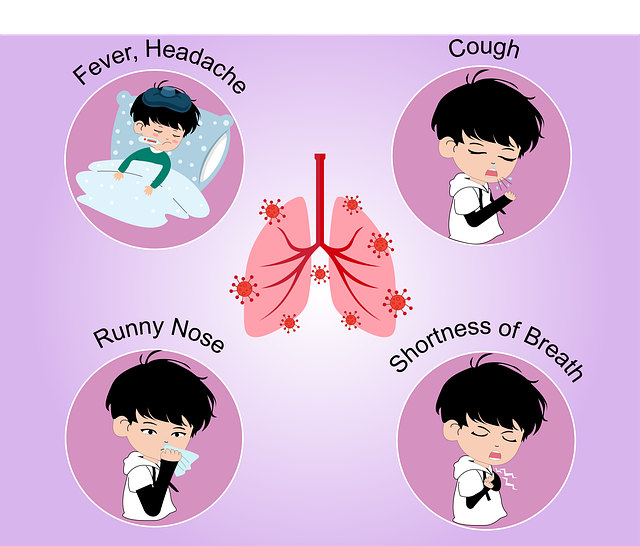
As soon as these people were diagnosed or suspect that they had said virus, it triggered an anxiety attack. And because shortness of breath or tightness in the chest is one of the symptoms that both COVID-19 and anxiety attack shares, it is possible that so many people mistake it for a more serious issue.
These people rush to the hospitals and then are put on ventilators. Being on a ventilator is not suggested for otherwise healthy people simply because it requires being calm and sedated, it is a painful and fear-inducing process, and it is easy to become dependent on the breathing machine. It also takes away your ability to breathe on your own.
Overcoming Anxiety During COVID-19
Personally, I struggle with fear and sometimes even anxiety attacks. As a matter of fact, when I returned to school in late January, I had an anxiety attack in the middle of the night.
My heart was palpitating, and I had trouble breathing. I didn’t really think it was an anxiety attack at the time.
As a matter of fact, I thought it was a more serious issue. But I prayed, sat up in my bed, and I felt the urge to do the following things:
Feel Embraced
First, I folded my legs and covered myself with my sheet. I learned that covering yourself with something or in something can replicate the feeling of being held or hugged.
It’s the reason why we swaddle babies in a blanket. This feeling is reminiscent of being in the womb and it is a feeling that we will always associate with comfort and love.
An example of this is Psalms 91:4 where David talks about God covering us with His feathers and being a refuge for us.
He shall cover you with His feathers,
And under His wings you shall take refuge;
His truth shall be your shield and buckler.
Psalms 91:4 NKJV
Take Deep Breaths
Secondly, I began taking steady, deep breaths through my nose. I also learned later that taking deep breaths can help stabilize a racing heart and slow down our thinking.
Concentrating on breathing helps to clear our mind and keep us focused. By focusing on my breathing, I was able to push aside any negative thoughts.
Breathing is an involuntary response, but we can also control it.
The verse that comes to mind for this is Genesis 2:7, where God breathes into the nostrils of man, and he became a living soul.
And the Lord God formed man of the dust of the ground, and breathed into his nostrils the breath of life; and man became a living being.
Genesis 2:7 NKJV
It’s important to remember to breathe through the nose and not the mouth as breathing through the nose helps to regulate and purify the air and helps to fill our lungs with more oxygen.
Close Your Eyes & Reduce Distractions
The last thing I did was close my eyes. By closing my eyes, I shut out the world around me. Visual distractions often escalate the issue rather than diminish it.
The one Psalms that comes to mind for this is Psalms 63. This was a Psalms that David wrote while he was in the wilderness and hiding from Saul who at the time wanted to kill him (1 Samuel 23).
One could say that theoretically David was trapped, knowing that if he left, Saul might easily kill him. David spent the time meditating and giving God praise and thanks.
He spent the time in self-reflection and acknowledgment that God was in control of the situation, despite the wilderness around him.
I did the above three things until I was able to go back to sleep with the reminder that God was always here and always present throughout any circumstance.
Trusting in God During the Pandemic
I won’t say that I haven’t experienced fear or anxiety, as we are all human and from time to time these things will happen, but I left with the understanding that I know what to do whenever these situations arise.
If you or someone that you know is feeling fearful or is suspecting that they’re diagnosed with COVID-19, while it is imperative that you practice social distancing and proper hygiene, also keep in mind that some of the symptoms that you may be experiencing can be that of a panic/anxiety attack, as most of us are fearful in these times.
Try practicing relaxation and breathing techniques, while also taking proper precautions regarding the virus.
Most importantly, trust your instinct, trust God, use wisdom and discernment, and most importantly don’t be afraid. Always remember 2 Timothy 1:7, Psalms 91, but most importantly during this time Isaiah 41:10.
The coastlands saw it and feared, the ends of the earth were afraid; they drew near and came.
Everyone helped his neighbor, and said to his brother, “Be of good courage!”
So the craftsman encouraged the goldsmith; he who smooths with the hammer inspired him who strikes the anvil, saying, “It is ready for the soldering”; then he fastened it with pegs, that it might not totter.
“But you, Israel, are My servant, Jacob whom I have chosen, the descendants of Abraham My friend. You whom I have taken from the ends of the earth, and called from its farthest regions, and said to you, ‘You are My servant, I have chosen you and have not cast you away: fear not, for I am with you; be not dismayed, for I am your God. I will strengthen you, Yes, I will help you, I will uphold you with My righteous right hand.’
Isaiah 41:5 – 10 NKJV
Thanks for reading about my experience with anxiety and COVID-19. Share your thoughts and comments below.
If you’d like to read more about my experiences, check out my blog, The RAVYN Blog using the link below:
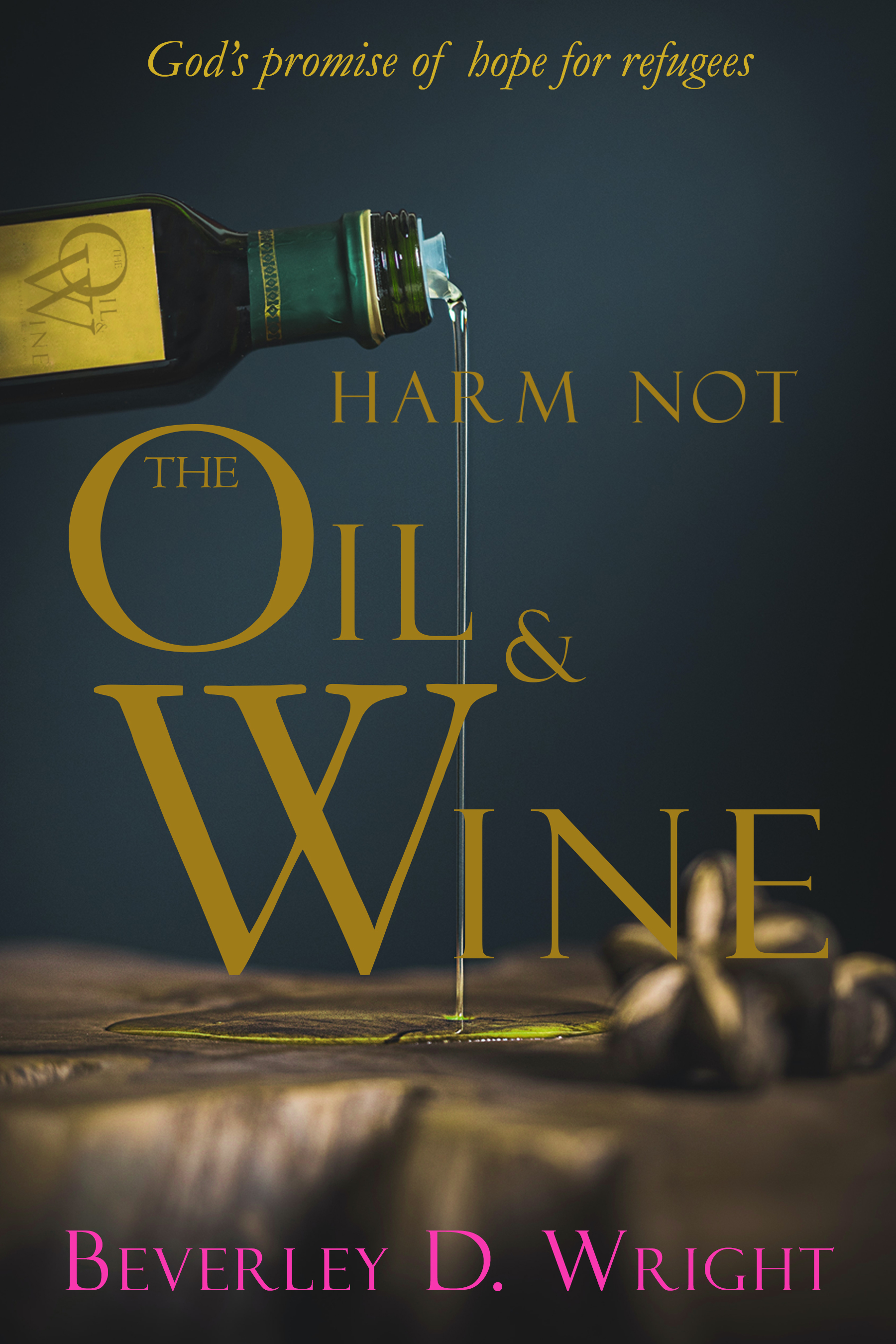


 Becoming the Oil and Wine
Leave a reply to Beverley Cancel reply